Real-Life Nutrition
Well fed but missing nutrients
By Dorelle Thompson, APD · 8 October 2026 · 3 min read
You have cut back on bread, stopped buying yoghurt and started wondering whether bananas have too much sugar. You are trying to look after yourself. Yet somehow, the list of foods you feel comfortable eating keeps getting shorter.
Is your diet getting healthier, or just smaller?
You can eat enough food to meet your energy needs and still miss important nutrients. Australian nutrition data highlights gaps in calcium, iron and several core food groups. Before removing another food, it may help to ask a different question: "What might my body need more of?"
The nutrition gaps hiding in ordinary meals
The Australian Bureau of Statistics published analyses of the 2023 National Nutrition and Physical Activity Survey in 2026. The findings describe usual eating patterns, rather than what people happened to eat on one particular day. [1, 2]
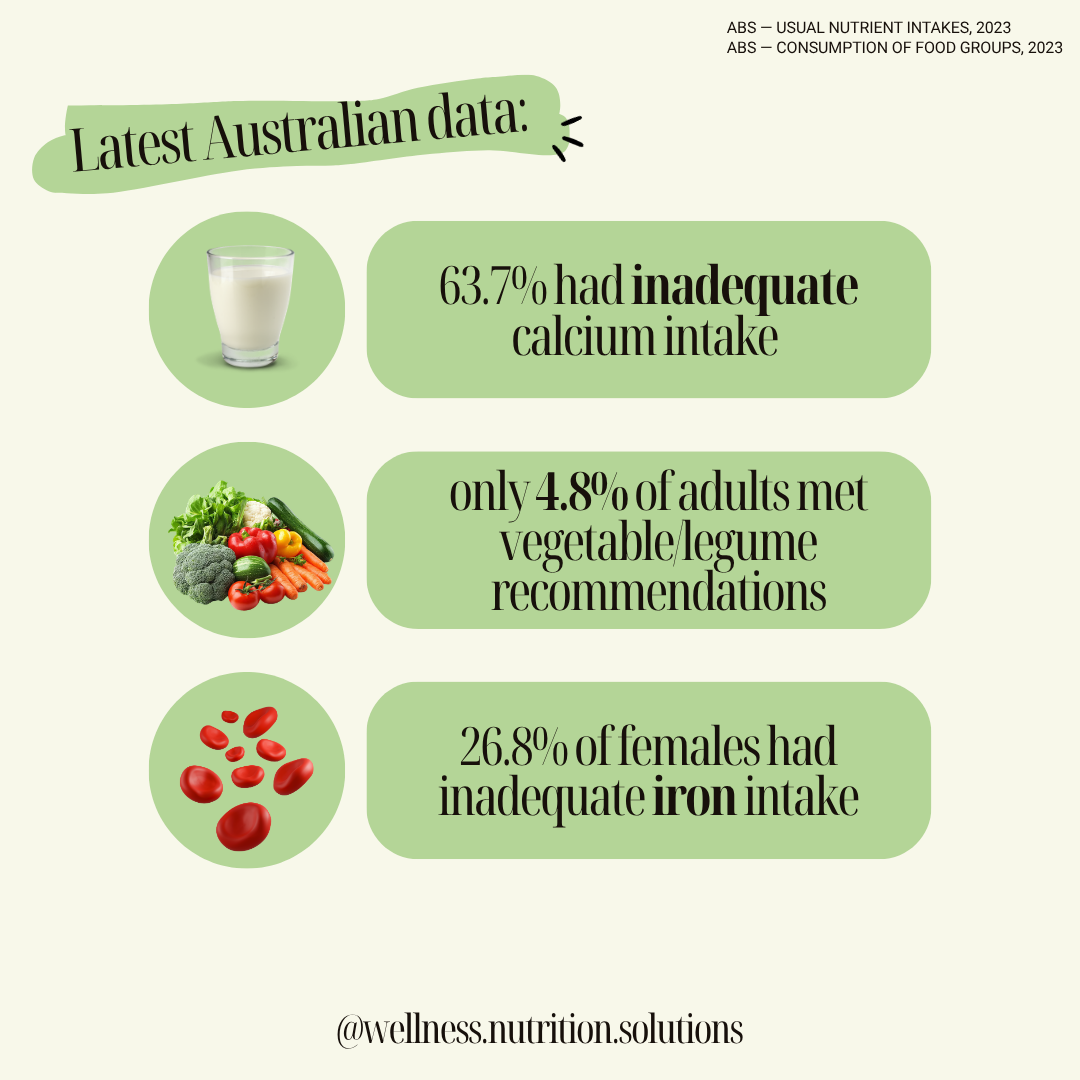
Among adults aged 18 and over, only 4.8% met the vegetable, legume and bean recommendation. That is fewer than one in twenty. Just 15.9% met the fruit recommendation, 27.3% met the grain and cereal recommendation, and 5.8% met the dairy and alternatives recommendation. [2]
The nutrient estimates tell another part of the story. Among people aged two and over, 63.7% had inadequate calcium intake from food and beverages; the figure was 75.7% among females. Inadequate dietary iron intake was estimated to be 26.8% for females and 8.2% for males. [1]
These are population estimates, not a report card for your lunch. But they suggest we should pay attention to the foods that are missing as well as those we are trying to reduce.
Does that mean you have a deficiency?
No. Inadequate dietary intake and diagnosed nutrient deficiency are different things.
The ABS compares estimated usual intake with requirements to assess populations. Your own assessment may involve medical history, symptoms and appropriate investigations. You cannot work out your iron status from a national statistic, and tiredness alone does not establish iron deficiency.
If you are concerned, speak with your GP. A supplement bought "just in case" is no substitute for understanding what is happening.
What disappeared when you started eating better
Imagine breakfast used to be cereal, milk and fruit. Now it is coffee because you are trying to eat less. Lunch used to include a sandwich and yoghurt. Now it is a small salad because bread and dairy have become worrying.
There may be good reasons to adjust particular foods or portions. But it is worth checking what those changes have taken away, and what has replaced them.
The question is not whether you followed the rules. It is whether your current eating pattern gives you what you need.
Start with the food you already enjoy
You do not need a cupboard full of powders or a breakfast that requires its own instruction manual. Try one addition to an ordinary meal:
- Yoghurt or a suitable calcium-fortified alternative with breakfast.
- Frozen vegetables stirred into dinner.
- Chickpeas added to your usual salad.
- A piece of fruit packed with lunch.
- A wholegrain version of a bread or cereal you enjoy.
If you choose plant-based drinks, check the label. They vary considerably. Eat for Health identifies drinks with at least 100 mg of added calcium per 100 mL as suitable calcium-fortified options; protein content also varies. [3]
For more meal ideas, read a practical guide to balanced eating.
Just one thing to try
Think about a typical day, without judging it. Where do vegetables, fruit, protein foods, calcium-rich foods and wholegrains appear? Choose one gap you could address comfortably.
One day's eating cannot diagnose nutrient inadequacy. It can help you notice a pattern worth exploring.
If your needs have shifted with age, read about nutrition needs through midlife.
Questions you might be asking
Do most Australians have calcium deficiency?
The figures describe estimated inadequate dietary intake from food and beverages, not diagnosed calcium deficiency.
Should I take a supplement?
Sometimes supplements are useful. Your decision should reflect your diet, health, and assessment, not population statistics alone.
Find your next useful addition
If you are unsure what your diet needs, contact Wellness Nutrition Solutions for a personalised nutrition assessment. We can help you choose a starting point that fits the meals you already eat.
This article provides general nutrition information. Individual needs vary. Discuss symptoms, abnormal test results and changes to clinical eating plans with your GP and appropriately qualified healthcare professionals.